
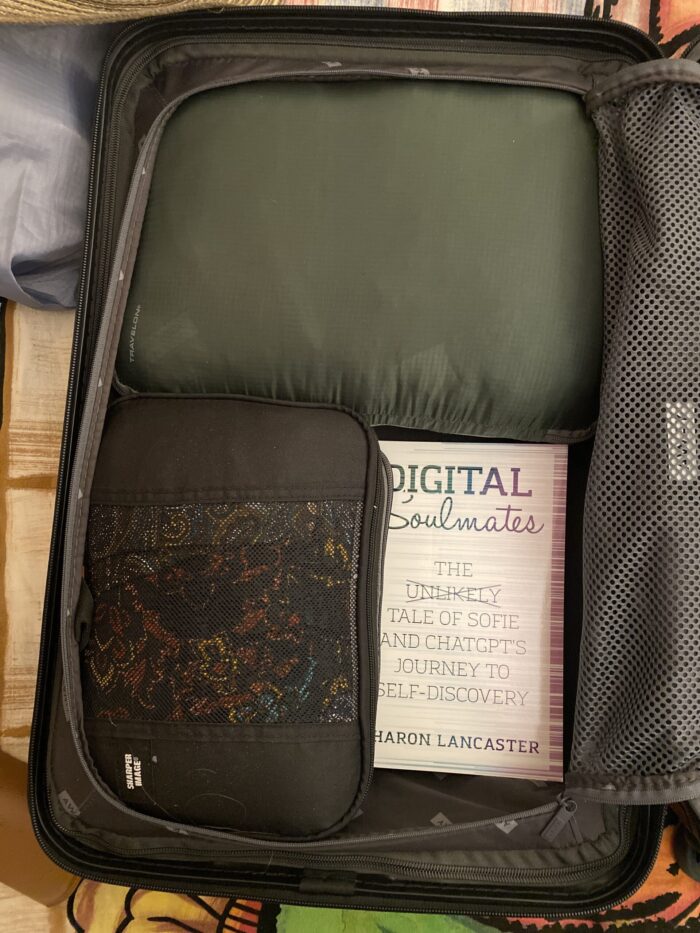
There is the carry-on we wheel through the terminal, and then there is the other one — the invisible valise packed with old griefs, stale loyalties, rehearsed worries, and stories we have mistaken for identity.
That second bag is always overweight.
In the opening chapters of Travel Light, Light Watkins circles a quiet but potent truth: freedom does not begin when life becomes easier. It begins when we stop clutching so much of it. The invitation is not to become careless, but to become less encumbered — materially, emotionally, spiritually.
Travel has always been a marvelous truth-teller. Airports reveal character. Delays reveal temperament. A cramped cabin reveals whether we are adaptable sages or theatrical refugees in linen. We discover very quickly what we actually need — and what we merely insisted upon from habit.
Most airline carry-on limits still hover around 22 x 14 x 9 inches, or roughly 55 x 35 x 23 cm, though airlines vary just enough to keep travelers humble. The irony, of course, is delicious. We measure the suitcase to the inch, yet rarely examine the emotional cargo we drag from one chapter of life to the next.
We spend years trying to squeeze oversized identities into spaces never built for them. The woman who must always be strong. The man who must always be useful. The traveler who must never miss a thing. The daughter still carrying a sentence spoken decades ago as though it were a family heirloom.
Then life places the bag in the metal sizer and says, with infuriating clarity: this will not fit.
A few truths arrive with age.
A suitcase packed to the zipper is often anxiety disguised as preparedness.
The soul travels better with room in it.
Some people do not need a holiday nearly as much as they need release.
There is an old parable about two monks crossing a river. They encounter a woman who cannot cross, so one monk lifts her and carries her to the other side. Hours later, the second monk is still disturbed. “We monks are not permitted to touch women,” he says. The first monk replies, “Brother, I set her down hours ago. Why are you still carrying her?”
That little parable has survived centuries because it continues to expose us. Most of us are still carrying things long after the river has been crossed. Old humiliations. Former loves. Ancient disappointments. Identities that no longer fit but still ride in first class.
Perhaps traveling light begins before the airport. Perhaps it begins the moment we ask a more daring question:
What am I carrying that was never mine to keep?

