
We live in a binge-watching world. People who wouldn’t dream of missing an episode of Yellowstone or The Crown somehow stop at Episode One of the greatest series ever written — the Bible.
Not the movie rights version, not the meme quotes, but the real saga: ancient scripts, lost gospels, banned books, side stories, and deleted scenes that make Game of Thrones look like children’s theatre.
So why do we keep re-reading only the King James Version, as if there were nothing before or after? Maybe because it’s familiar — the soundtrack of Sunday mornings, the scent of hymnals and pew polish, the steady rhythm that sounds like God speaking in perfect English.
But here’s the twist: King James’s Bible wasn’t Season One. It was Season Three.
Before it came The Great Bible (Henry VIII’s political rebrand), The Geneva Bible (the rebel’s choice), and the Bishops’ Bible (the establishment’s polite defense). Each one told the same story with a slightly different accent — a remix of revelation and rule. And before any of them?
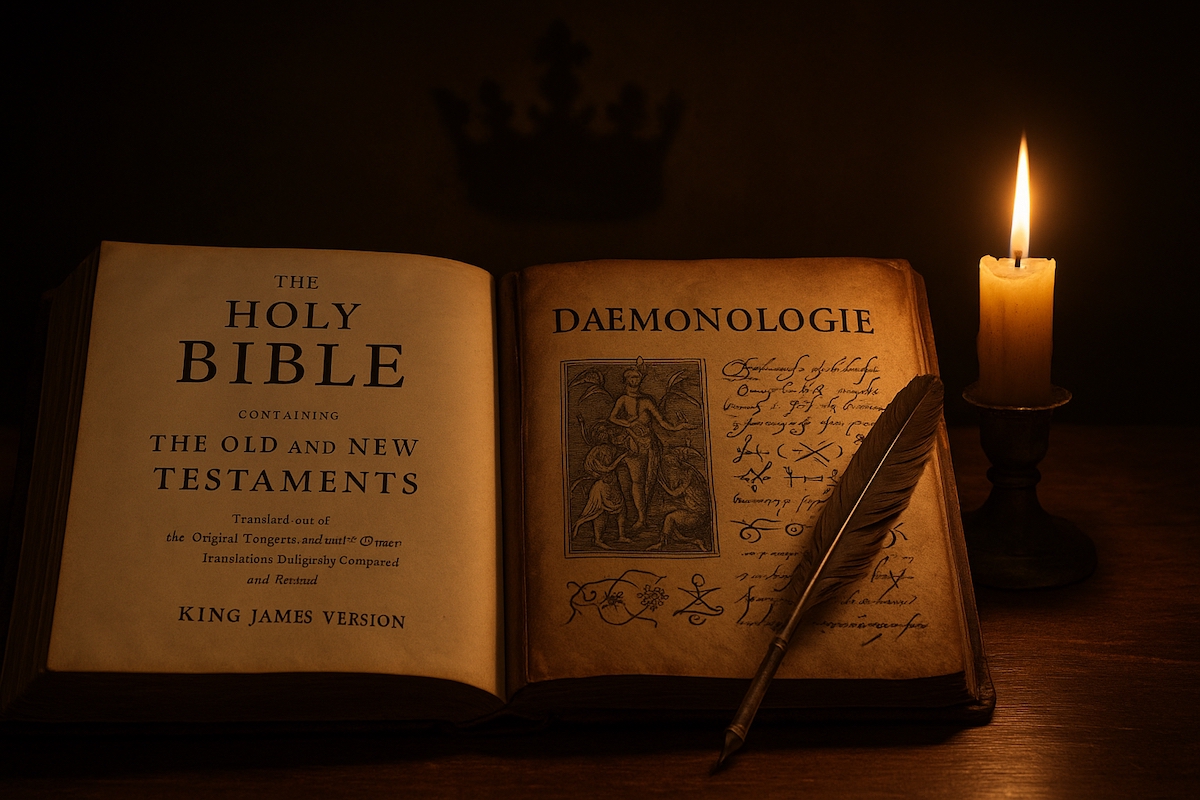
There was another book, written by the same royal hand who later authorized the Holy Word: Daemonologie.
That’s right. The same man who gave us “The Lord is my shepherd” once wrote a treatise on demons, necromancy, and witchcraft — insisting that evil could be proven, hunted, and burned.
James Stuart, before he was “King James the Bible Guy,” was King James the Demonologist. His first bestseller wasn’t about grace; it was about fear. It’s the prequel no one reads.
Imagine a world where the author of the world’s most beloved Bible once interrogated witches in person — convinced the Devil was hiding in women, storms, and shadows. Daemonologie was his user manual for exorcising the unknown. It revealed his deepest truth: the belief that language itself — words spoken, written, or cursed — had power.
And maybe that’s why his Bible endures. He didn’t just believe in God. He believed in utterance — that what we say can summon the sacred or the damned. The King who feared spells ended up writing one.
Maybe that’s the point of the whole series: not just to believe, but to read with awe. To keep turning the pages — from demons to disciples, from fear to faith — and notice how easily they share a spine.
Next time: Daemonologie — The King’s First Book of Shadows.

