
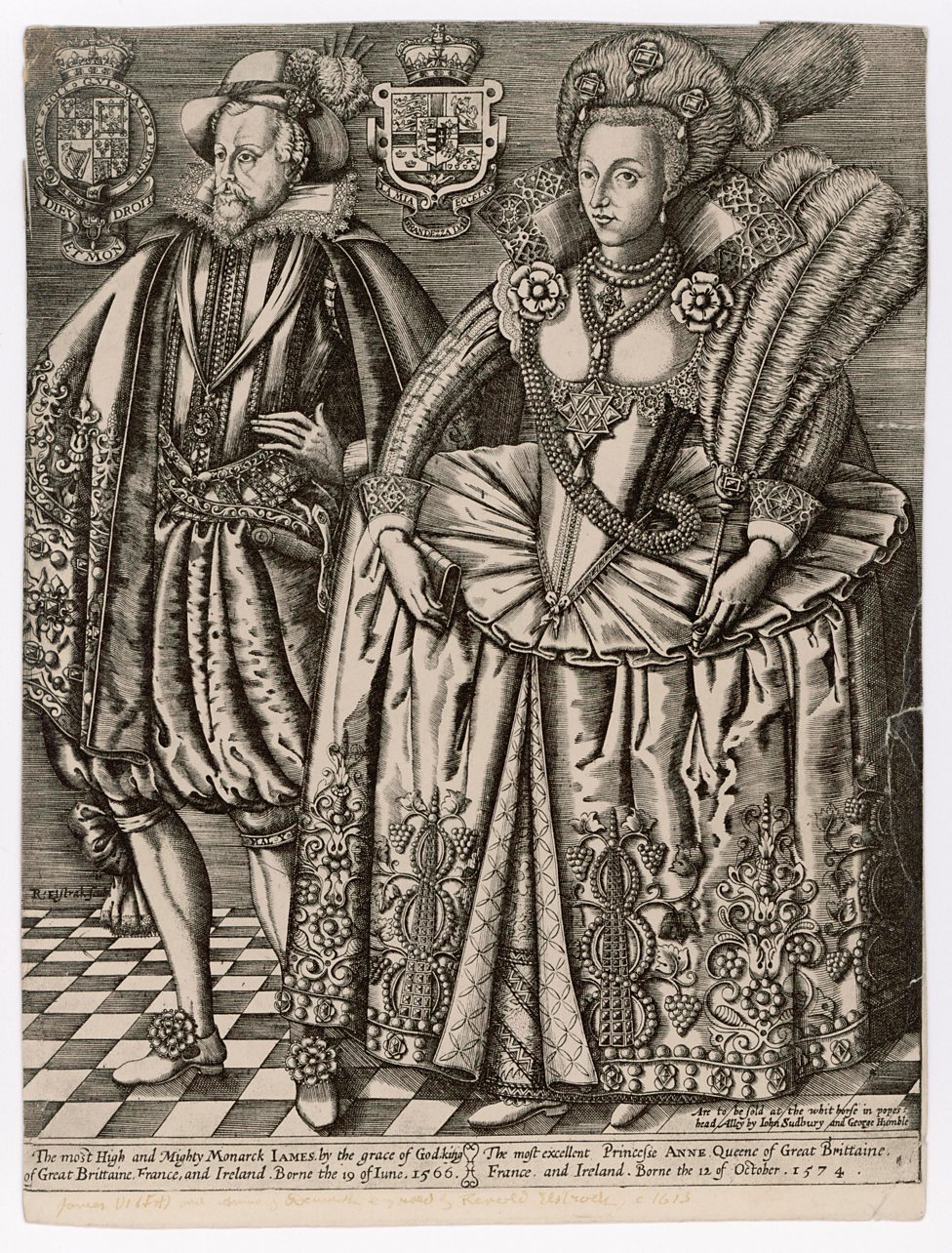
Before the world knew him as the man behind the King James Bible, James Stuart was publishing his own guidebook to hell. It was called Daemonologie — a slim, serious volume written in 1597 that reads like part theology, part witch-hunter’s manual, and part royal therapy session.
It opens like a philosophical dialogue — calm, academic, composed — yet beneath the civility hums the terror of a young king haunted by invisible enemies.This wasn’t fiction. James believed every word. He had reason to. As a boy, he’d inherited a throne bathed in blood. His mother, Mary, Queen of Scots, was executed by her cousin Elizabeth I. His father was murdered. The world he grew up in was one where power and betrayal danced nightly. Fear was his tutor. Faith was his armor.
When storms nearly sank his ship returning from Denmark in 1590, James wasn’t alone. A royal entourage accompanied him — including his new bride, Anne of Denmark, courtiers, and crew — all terrified as the North Sea roared around them. The winds were so violent that several vessels were lost, and whispers spread that Danish witches had conjured the tempest to harm the young royal couple. James, already steeped in superstition, believed it. The idea that dark forces had targeted his marriage — and by extension, his divine right to rule — ignited an obsession that would soon spill onto Scottish soil in the form of witch trials and his feverish book, Daemonologie.
Written as a debate between a skeptic and a believer, it argues that witches, necromancers, and spirits are not only real — they’re actively at war with heaven. James describes their pacts with the Devil, their rituals, their flight, and their punishments with unnerving precision. He insists that denying their existence is itself a heresy — a dangerous disbelief that weakens the Church and invites evil.
To him, witchcraft was not superstition; it was sedition.It was rebellion against divine hierarchy — and by extension, against him. It’s easy to dismiss Daemonologie as medieval fearmongering, but that misses the point. It’s the diary of a man trying to bring order to chaos. James was a monarch with a philosopher’s mind and a haunted heart — trying to intellectualize fear, to codify mystery. He saw the Devil in storms, in women, in doubt.
He believed that language — naming, defining, condemning — was the weapon of light. He thought if he could describe evil well enough, he could contain it. And that’s where his magic began.
Because Daemonologie isn’t just about witches; it’s about the power of words. Every page reveals a man learning the incantation of authority — realizing that words can summon obedience, burn heresy, and bend heaven to a crown. It’s not hard to see how this same man, a few years later, would commission a new Bible — one that sounded just as commanding, just as absolute.
The King who feared spells became the world’s most influential spellcaster. And his first spellbook was called Daemonologie.
Next time: When the Sacred Met the Sinful — Other Books of the Age.

